Innovation and Design Thinking
Using design thinking tools to innovate, lead change and solve difficult problems.

Using design thinking tools to innovate, lead change and solve difficult problems.
Every organisation wants more innovation. Yet most new ideas start from inside the building: what leaders assume customers and colleagues need, rather than what they actually need. You could call this ‘inside-out’ thinking.
Teams jump straight to solutions, the obvious ideas win and the breakthrough never arrives.
Innovation is not a flash of genius. It is a repeatable process that any leader can learn. It starts with empathising with your customers/clients/users: collecting the dots before connecting the dots. In other words, ‘outside-in’ thinking. Get the human insight right and the right problem, and the right solution, become far easier to find. That process is Design Thinking.
A hands-on, high-energy session in which leaders learn and practise the human-centred design methodology developed at IDEO and the Hasso Plattner Institute of Design at Stanford, and apply it to a real challenge from their own work. Michelle Rushton and Shaun Kenny, founders of People of Influence, answer three questions:
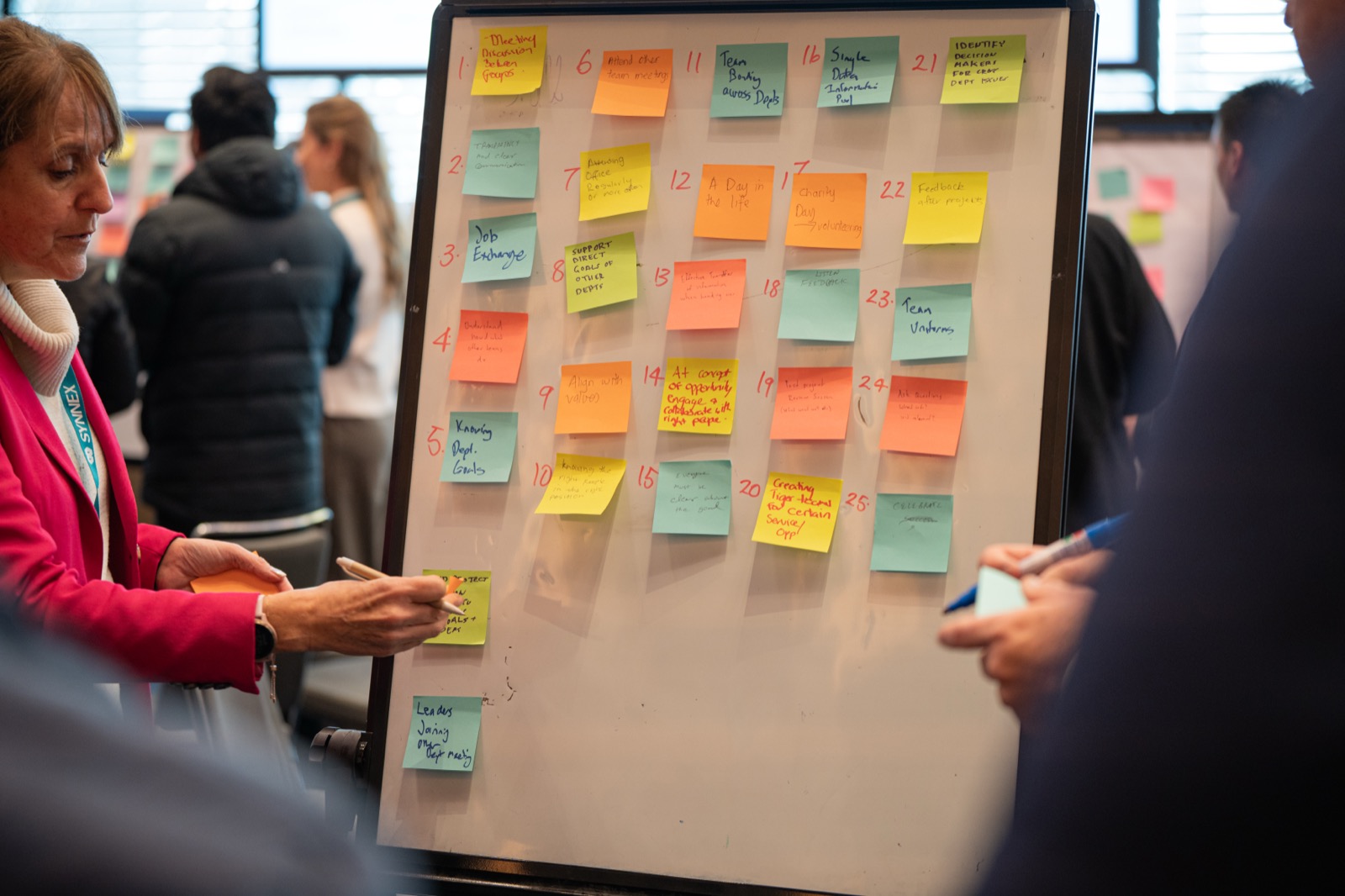

Sponsored by the Australian Managing Director, we used design thinking with Microsoft’s executive team, broader leadership and design thinking teams to embed the company’s value of customer obsession.

An in-depth empathy study for Westpac’s global markets division, touring internationally to interview customers and investors. Collecting the dots before connecting them, the observations fed a design thinking process to innovate their services and business ideas.

Part of GPT Group’s high-profile Elevate leadership program. Each group’s capstone project applied design thinking to a real, high-priority business challenge selected by the CEO, then presented on the day to the CEO, executive team and around 50 other leaders. The program ran for six consecutive years to great acclaim.
The same approach, replicated across industries:
“Design thinking is about accelerating innovation to create better solutions to the challenges facing business and society.”
Five stages, from the Hasso Plattner Institute of Design at Stanford. Leaders work through each one on their own challenge, looping back as often as they need to.
Starting from a sharp ‘How might we…?’ question, leaders generate ideas in two distinct steps. Most teams blur them together. Separating them is what turns a room full of sticky notes into ideas worth backing.
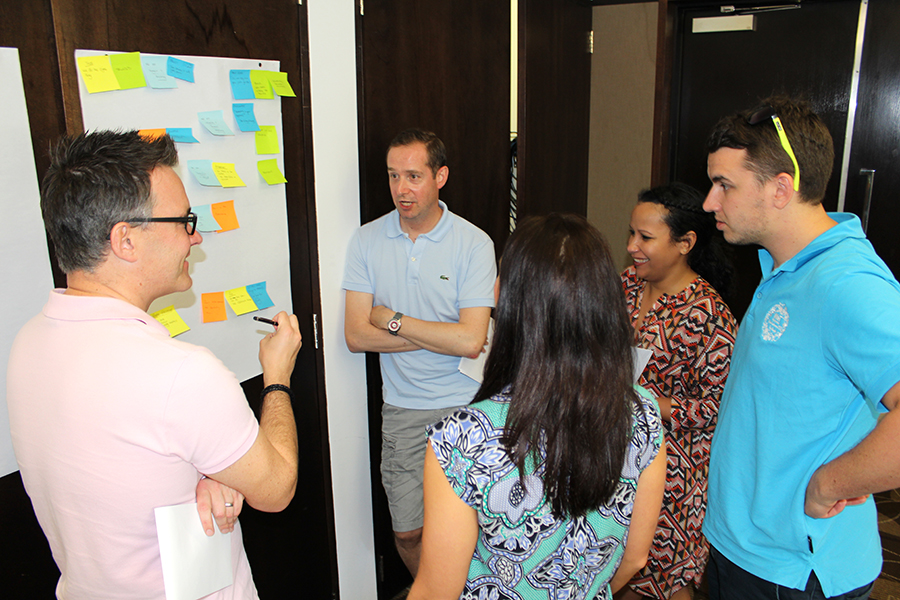
Timings and emphasis are tailored to your group and the time available.

People of Influence is the consultancy through which Michelle Rushton and Shaun Kenny deliver leadership programs, team offsites and impactful conferences.
Contact People of Influence →
Leadership Engine is our proprietary platform for measuring and improving leadership effectiveness with diagnostics, dashboards and behavioural nudges.
Visit Leadership Engine →